Ngorongoro Conservation Area
Ngorongoro
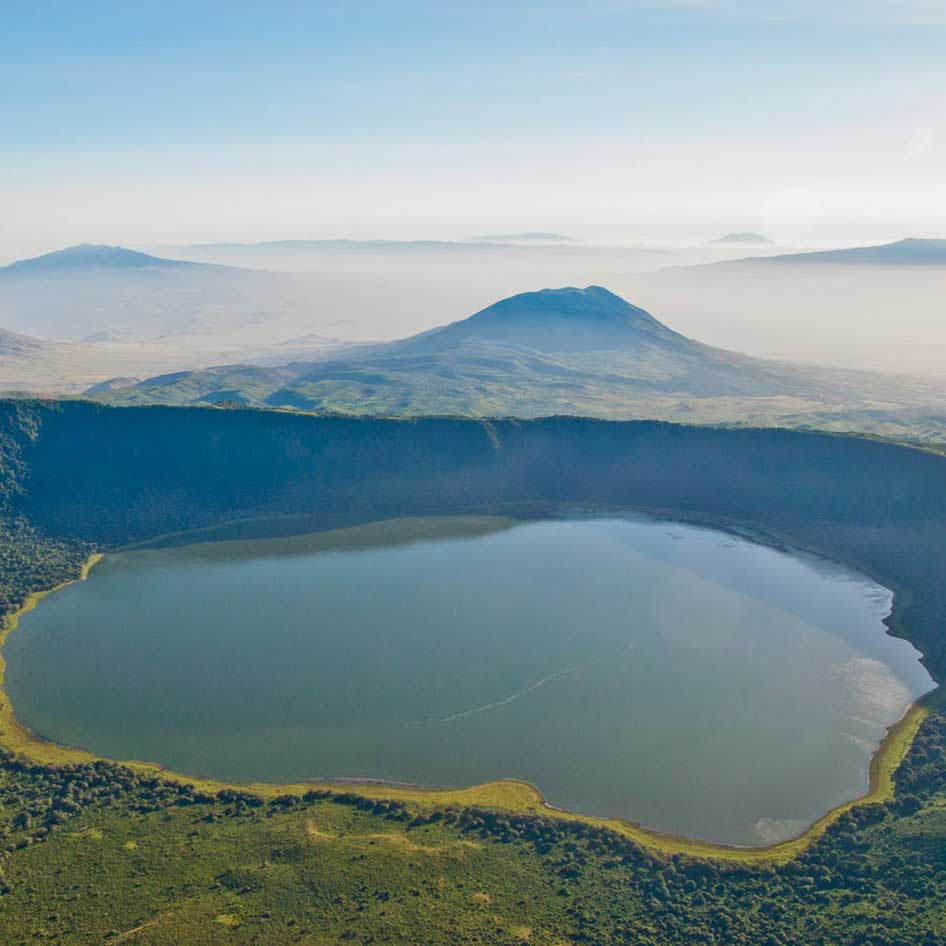
The Ngorongoro Crater, perched at an elevation of 2,200 meters, offers panoramic views of its 260 square kilometers caldera floor. Guided safaris provide an up-close experience with a variety of wildlife, including lions, elephants, and a rich array of bird species. However, the region grapples with conservation dilemmas, balancing tourism with the preservation of its delicate ecosystem and the coexistence of the Maasai people and wildlife.
Details of Ngorongoro Crater
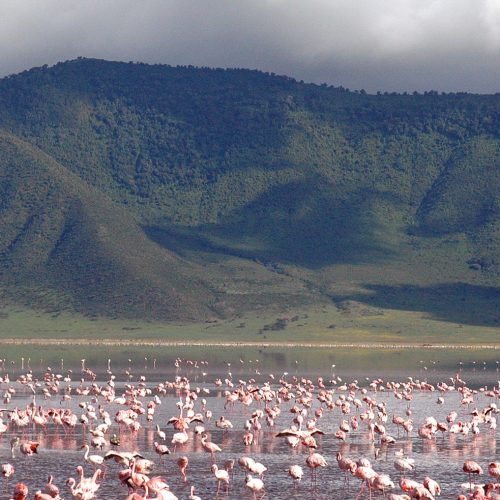
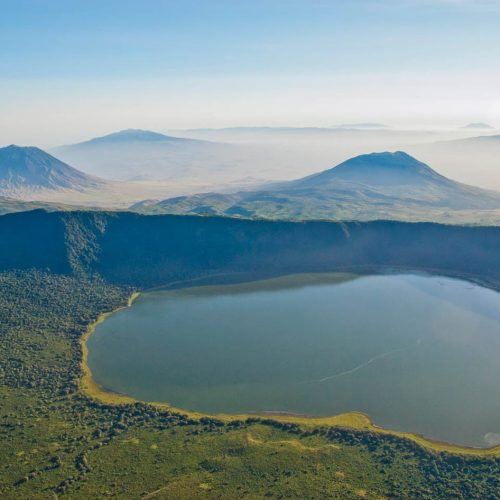
The Ngorongoro Crater, a colossal volcanic caldera nestled in northern Tanzania, stands as a testament to the forces of nature that shaped it some 2.5 million years ago. With a sprawling diameter of approximately 20 kilometers (12 miles) and an expansive floor covering around 260 square kilometers (100 square miles), it is the largest intact volcanic caldera in the world. This geological wonder was formed through a cataclysmic event, where a towering volcano collapsed upon itself, creating a unique and diverse landscape comprising grasslands, swamps, forests, and the alkaline Lake Magadi.
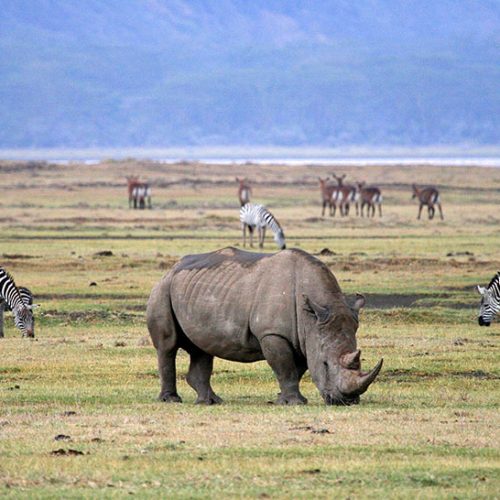
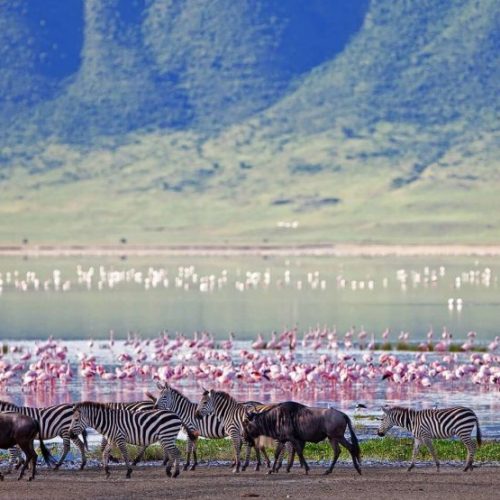
The crater is not only a geological spectacle but also a thriving ecosystem teeming with an impressive array of wildlife. Its floor hosts a remarkable concentration of large mammals, including elephants, lions, cheetahs, and wildebeest.
This biodiversity has led to the designation of the Ngorongoro Conservation Area as a UNESCO World Heritage Site, aimed at preserving both the natural wonders and the cultural heritage of the Maasai people who share this space with the wildlife. The Maasai, known for their traditional pastoralist lifestyle, coexist harmoniously with the animals, contributing to the area’s distinctive character.
Tourism plays a pivotal role in the Ngorongoro Conservation Area, attracting visitors eager to experience the breathtaking scenery and witness the intricate interactions between flora and fauna. Guided safaris offer an immersive experience, allowing visitors to observe the delicate balance of this enclosed ecosystem. However, this popularity also presents challenges in terms of conservation, requiring a careful and sustainable approach to tourism to mitigate its impact on the environment and the delicate equilibrium that defines this natural haven. Despite these challenges, the Ngorongoro Crater remains a captivating destination that showcases the interconnected beauty of nature, culture, and conservation in East Africa.
Apart from the iconic wildebeest and zebras, the Serengeti is home to an incredible diversity of wildlife. Some of Africa’s most famous animals can be found here, including the “Big Five” – lions, elephants, leopards, buffalo, and rhinoceros. The park’s diverse ecosystems support a variety of other mammals, birds, and reptiles, making it a paradise for wildlife enthusiasts and photographers.
The Serengeti also offers a range of activities for visitors, such as game drives, hot air balloon safaris, and guided walks, providing different perspectives on the incredible biodiversity of the region. The local Maasai people, who have coexisted with wildlife for centuries, contribute to the cultural richness of the area.
Ngorongoro
The Ngorongoro Crater, perched at an elevation of 2,200 meters, offers panoramic views of its 260 square kilometers caldera floor. Guided safaris provide an up-close experience with a variety of wildlife, including lions, elephants, and a rich array of bird species. However, the region grapples with conservation dilemmas, balancing tourism with the preservation of its delicate ecosystem and the coexistence of the Maasai people and wildlife.
Details of Ngorongoro Crater
The Ngorongoro Crater, a colossal volcanic caldera nestled in northern Tanzania, stands as a testament to the forces of nature that shaped it some 2.5 million years ago. With a sprawling diameter of approximately 20 kilometers (12 miles) and an expansive floor covering around 260 square kilometers (100 square miles), it is the largest intact volcanic caldera in the world. This geological wonder was formed through a cataclysmic event, where a towering volcano collapsed upon itself, creating a unique and diverse landscape comprising grasslands, swamps, forests, and the alkaline Lake Magadi.
The crater is not only a geological spectacle but also a thriving ecosystem teeming with an impressive array of wildlife. Its floor hosts a remarkable concentration of large mammals, including elephants, lions, cheetahs, and wildebeest.
This biodiversity has led to the designation of the Ngorongoro Conservation Area as a UNESCO World Heritage Site, aimed at preserving both the natural wonders and the cultural heritage of the Maasai people who share this space with the wildlife. The Maasai, known for their traditional pastoralist lifestyle, coexist harmoniously with the animals, contributing to the area’s distinctive character.
Tourism plays a pivotal role in the Ngorongoro Conservation Area, attracting visitors eager to experience the breathtaking scenery and witness the intricate interactions between flora and fauna. Guided safaris offer an immersive experience, allowing visitors to observe the delicate balance of this enclosed ecosystem. However, this popularity also presents challenges in terms of conservation, requiring a careful and sustainable approach to tourism to mitigate its impact on the environment and the delicate equilibrium that defines this natural haven. Despite these challenges, the Ngorongoro Crater remains a captivating destination that showcases the interconnected beauty of nature, culture, and conservation in East Africa.
Apart from the iconic wildebeest and zebras, the Serengeti is home to an incredible diversity of wildlife. Some of Africa’s most famous animals can be found here, including the “Big Five” – lions, elephants, leopards, buffalo, and rhinoceros. The park’s diverse ecosystems support a variety of other mammals, birds, and reptiles, making it a paradise for wildlife enthusiasts and photographers.
The Serengeti also offers a range of activities for visitors, such as game drives, hot air balloon safaris, and guided walks, providing different perspectives on the incredible biodiversity of the region. The local Maasai people, who have coexisted with wildlife for centuries, contribute to the cultural richness of the area.
Happy Customers
See what our adventurers report about their experiences with Prime Kilimanjaro:
EXCELLENT Based on 36 reviews
 Posted on Tripadvisor
 Ben BWhy Prime Kilimanjaro Stands Out Amongst the Crowd With over 120 registered climbing companies operating on Kilimanjaro, standing out is no small feat. Prime Kilimanjaro managed to impress me and stand out in several ways that genuinely matter when you're attempting one of the world's great climbs. An Exceptional Crew From Day One: From the moment we arrived, the porters and guides set the tone with a warm welcome of song and celebration that immediately eased any nerves about the trek ahead. Our lead guides, Jackson and Lazaro, were knowledgeable, patient, and thoughtful in their acclimatization recommendations, adjusting pace and approach to keep both my father and me feeling strong throughout. Their expertise in local flora, fauna, and Tanzanian culture added a richness to the experience that went well beyond simply getting us to the summit. Professional, Organized, and Safe: Our camp setup was impressively efficient and well-organized each day before we even reached the camps. Tents were clean and spacious, and our chef Cedrick consistently delivered meals that were genuinely excellent given the altitude and conditions. Daily health check-ins ensured we were acclimatizing appropriately, and the team carried emergency medical equipment including supplemental oxygen, something that gave me real peace of mind as a physician. Safety and professionalism were clearly a priority at every stage. A Team That Celebrated With Us: What I'll remember most is how warm and human the entire team was. Guides and porters checked in on us throughout each day's trek and in camp, always with smiles and genuine enthusiasm. After we reached Uhuru Peak, the crew celebrated with us as if it were their own accomplishment. That shared moment made me feel less like a client and more like part of a family. Outstanding Leadership and Logistics: Jonas deserves special recognition. Before the trip, he was highly responsive and helped answer every logistical question promptly. On the ground, he ran a tight, professional operation. Beyond the climb itself, he organized excursions that genuinely elevated the overall Tanzania experience: a visit to Ngare Ndare (Norro) Waterfalls, a tour of Moshi Town, an immersive local coffee-making demonstration, and a Maasai village visit. These add-ons were thoughtfully curated and added exceptional value to an already strong package. Bottom Line: Prime Kilimanjaro delivers on every dimension that matters: safety, expertise, organization, and genuine human connection. Whether you're a seasoned trekker or tackling your first high-altitude summit, I'd highly recommend trekking Mt Kilimanjaro with them.Posted on Tripadvisor
 Léa VExpérience inoubliable sur la voie Lemosho – avec les Marafiki de la team Prime Kili Expérience inoubliable sur la voie Lemosho – avec les Rafikis de la team Prime Kili Nous sommes parties entre 2 copines pour réaliser ce trek par la voie Lemosho, et l’expérience a été tout simplement incroyable. Avant même le départ, Jonas a été très présent, à l’écoute et particulièrement arrangeant pour toute l’organisation. Cela nous a tout de suite mises en confiance. Tout au long du trek, l’organisation a été impeccable. Jonas s’entoure d’une équipe extrêmement bienveillante, professionnelle et humaine, ce qui rend l’aventure encore plus forte. Petit point d’attention toutefois : si, comme nous, vous réservez 8 jours de trek mais que vous le réalisez finalement en 7 jours (sur avis de Jonas et des guides), pensez à clarifier en amont les conditions concernant la dernière nuit. Nous avons dû régler une nuit supplémentaire à l’hôtel alors que nous avions payé les 8 jours. Cela reste un détail qui se règle facilement avec une meilleure communication dès le départ, mais c’est bon à savoir. Grâce à l’énergie et à la motivation de l’équipe, nous avons donc réussi à faire l’ascension en 7 jours au lieu de 8. Toute la semaine, nous avons été portées par leur sourire, leur bonne humeur et leur force. Asante sana à Vicent, Mzungu, Alex, Hassan, Elly, G, Chugaa et Saria ! Un immense merci aussi à Richard, le meilleur cuisinier, qui nous a régalées chaque jour avec une cuisine variée et délicieuse. Nous n’avons jamais manqué d’énergie ! Et pour finir, asante sana à nos supers guides Lazaro et David. Ils ont cru en nous du début à la fin. Les journées sur la voie Lemosho ont été remplies de partage, de rires, de bonne humeur et d’apprentissage. Lors de l’ascension finale, ils ont su nous motiver et nous rassurer pour que nous atteignions le sommet « pole pole », mais ensemble. Leur connaissance de la faune, de la flore et de la culture tanzanienne apporte une véritable dimension humaine et culturelle au trek. La semaine s’est achevée avec beaucoup d’émotion : un dernier repas partagé, des chants et des danses tous ensemble, toujours avec ces sourires et cette énergie qui nous ont accompagnées tout au long de l’aventure. Une expérience inoubliable, humaine et profondément enrichissante. 🌍✨Posted on Tripadvisor
 MANON RInoubliable ✨ Nous sommes parties entre amies avec Prime Kili pour l’ascension du Kilimandjaro par la voie Lemosho en 8 jours, et cette expérience restera inoubliable. Dès les premiers échanges, nous avons apprécié la réactivité et la disponibilité de Jonas. À notre arrivée en Tanzanie, tout s’est déroulé parfaitement : transfert à l’heure, accompagnement personnalisé par Jonas lui-même (banque, magasin de location pour le matériel manquant, achat de carte SIM, supermarché, etc.). L’hôtel réservé par Prime Kili était très propre et confortable. Le lendemain, nous avons retrouvé l’équipe qui nous accompagnait : 7 porteurs, 1 cuisinier et 2 guides pour 2 personnes. Nous avons passé 6 jours extraordinaires avec une équipe exceptionnelle. Chacun a gardé le sourire en toutes circonstances, même sous la pluie et dans le froid, ce qui a largement contribué à notre réussite. La nourriture était excellente, et nous avons été impressionnées par la qualité du service, si loin de toute civilisation. Les guides avaient une parfaite connaissance de la montagne et du terrain, ce qui nous a permis de nous sentir en sécurité à chaque étape. Grâce à eux, nous avons également beaucoup appris sur la Tanzanie. Aussi, durant le trek, comme nous avancions rapidement, il nous a été proposé de doubler une étape afin de terminer en 7 jours au lieu de 8. La nuit d’hôtel supplémentaire ainsi que le petit-déjeuner ont alors été pris en charge par l’agence. Rien ne nous a manqué durant notre séjour, tout était vraiment très bien organisé. Un immense merci à toute l’équipe pour son implication, son sérieux et la sincérité des moments partagés. Prime Kili est une agence à taille humaine, sérieuse, réactive et professionnelle, que nous recommandons les yeux fermés. Nous souhaitons toutefois apporter quelques précisions importantes afin d’aider les futurs voyageurs à bien préparer leur séjour. Il est essentiel d’échanger clairement en amont sur les modalités pratiques pour éviter toute surprise. Nous avions versé un acompte avant le départ en pensant régler le solde sur place, sans savoir que les DAB sont plafonnés à 400 000 shillings, ce qui complique les retraits. De plus, les codes de pourboires ne nous ont été communiqués qu’une fois sur place : environ 20 $/jour par guide, 15 $/jour pour le cuisinier et 8 à 12 $/jour par porteur, représentant un budget conséquent. Ces pourboires sont évidemment amplement mérités, et nous les avons donnés avec grand plaisir, mais nous aurions apprécié être informées de ces montants à l’avance. Malgré ces points, notre expérience avec Prime Kili reste exceptionnelle, tant sur le plan humain que sur celui de l’organisation du trek. Un grand merci. 🙏🏻Posted on Tripadvisor
 Greg DelesalleSemaine extraordinaire avec l’équipe de Prime Kilimandjaro Quelle expérience ! En plus de la beauté des paysage de la montagne, les guides Jackson et Francis ont été merveilleux, toujours là pour nous ! La logistique du trek était parfaite, la tente était propre et confortable à deux avec séparation au milieu, la nourriture était au top (Richard est un très bon cuisinier) , et le reste de l’équipe a tout fait pour que tout se passe bien. Je recommande vivement cette agence pour ceux qui veulent faire l’ascension du Kilimandjaro de manière bien organisée avec des guides à l’écoute. Et un grand merci à Jonas qui a été très réactif par message à chaque fois qu’on avait des questions en amont du voyage.Posted on Tripadvisor
 Thomas AIncredible climb experience We had an incredible Kilimandjaro climb with prime Kilimandjaro. The guides, Jackson and Francis, were very careful about how our body react to the altitude, so we felt very safe with them. The cook chef Richard was vert surprising and skilled. All the porters were very human, attentive, and all created a great atmosphere ! We definitely had an incredible time with the team, and we definitely recommend prime Kilimandjaro ! ThomasPosted on Tripadvisor
 DayTrip41567593139Une aventure humaine incroyable ! J'ai fais l'ascension avec Prime Kilimanjaro par la voie Machame en 6 jours, et tout a été parfait du début à la fin. Toute l'équipe a été d'une bienveillance exceptionnelle et tout était bien organisé. C'est une équipe sérieuse avec beaucoup d'expérience sur cette ascension. Ils sont pleins de petites attentions, comme le réveil avec une tasse de thé dans la tente, des petites pauses surprises avec des gâteaux, sur une vraie chaise, des repas chauds délicieux à tous les repas, une énergie et une bonne humeur à toute épreuve. Ils sont incroyables ! Un grand merci à : @Lazaro, un super guide, attentionné et professionnel qui connaît le Kilimandjaro comme sa poche et qui sera vous emmené au sommet en sécurité. @Shadi, le super cuisinier, qui a notamment réussi à cuisiner un poulet-frites à 4600m! @Ellie, toujours aux petits soins et prévenant, du réveil au coucher. @Zungo, un sourire et une sympathie qui égayent vos journées. @Hassan, toujours un mot gentil. @Sam, discret mais efficace jusqu'au sommet. You are the Best 🫶 Et un grand merci à Jonas pour l'organisation de cette aventure, mais aussi pour ces 3 jours de Safari avec Momo, notre super guide avec qui on ou voir quasiment tous les animaux des 3 parcs. Je recommande chaleureusement cette agence locale.Posted on Tripadvisor
 Viviana PExpérience et aventure inoubliable de l’ascension du kili et safari à Tanzanie. Magnifique ascension au sommet du Kili, Lemosho 8 jours avec une magnifique équipe bienveillante , professionnelle et souriante. Excellent organisation et bonne repas , copieuse. C’était 8 jours d’aventure précieuse, heureuse d’avoir partagé votre vie avec moi, j’apprécie . Gros merci à Sebastian, Elly, Audifasi,Mzungi, Athuman, Nuvdin, Hassan , Charles, et mon excellent , sympathique guide Alfred, Simba. Mes respects et admiration à tous pour votre travail et passion. Vous avez fait possible mon ascension au kili. Et encore merci pour le safari de 4 jours. Inoubliable! A coupé le souffle! Merci Momo, excellent guide, le chef cuisinier, super! . Tout dans la joie! Avoir vécu tout cette aventure m'a permis approche un peu du peuple tanzanien et sa culture. Merci infiniment Jonas, excellente gestion et professionnalisme de votre agence locale à Arusha. Bravo Prime Kilimanjaro . Vivian ,Montréal , CanadaPosted on Tripadvisor
 Kinga Fwell-organized trekking on Kilimanjaro I highly recommend this company for anyone wanting to climb Kilimanjaro. We felt well-cared for from the very beginning, from trip planning, when all our questions were answered very quickly, through preparation for the expedition, providing a detailed list of necessary equipment, airport transfers, and accommodations. During the trek, everyone on the team took excellent care of us, with fresh, delicious, and filling food prepared daily. We received tremendous support during the summit push. I wholeheartedly recommend this company.Posted on Tripadvisor
 Sauhat MHiking at Mountain Kilimanjaro I completed the 7-day Lemosho route with Prime Kilimanjaro, and I cannot express enough how pleased I am with their exceptional service. Right from the start, I encountered some altitude challenges, but my guide was always there, ensuring I felt supported and well taken care of. The tents were excellent, the food was delicious, and the team's hard work was evident—they truly made our summit dreams a reality. Reaching the summit was a significant challenge for me, coming from sea level, but Guide Edson was a true motivator, doing everything possible to ensure I reached the top. I also want to give a special shoutout to summit porter Isaya for his unwavering support and to Jonas for ensuring everything ran smoothly from the outset. I highly recommend Prime Kilimanjaro 100% for anyone looking to ascend Kilimanjaro!Posted on Tripadvisor
 Truc Viet LExcellent service at good price!! We had a wonderful 7-day climb with Prime Kili via the Machame route in July 2025. The whole crew were excellent and dedicated, especially our 2 guides Gasper and Bubusha. Prime Kili probably has one of the best valued prices among the Kili tour agencies. For the price we paid (way below market average), we had great equipment (tents, mattresses), excellent guides and services (including cooked meals on the trail). Jonas, the owner, really took good care of his customers so communications, logistics were really smooth end-to-end, and he even had the guides check our oxygen and heart rate twice daily. I would totally recommend Prime Kili to whoever wanna climb this legendary mountain and don't wanna pay too much.
Safari Tips
- safari tips
Do I Need a Visa to Enter Tanzania?
- safari tips
Why You Should Book a Hot-Air Balloon Safari in Tanzania
- safari tips
Is yellow fever required to inter Tanzania?
- safari tips